
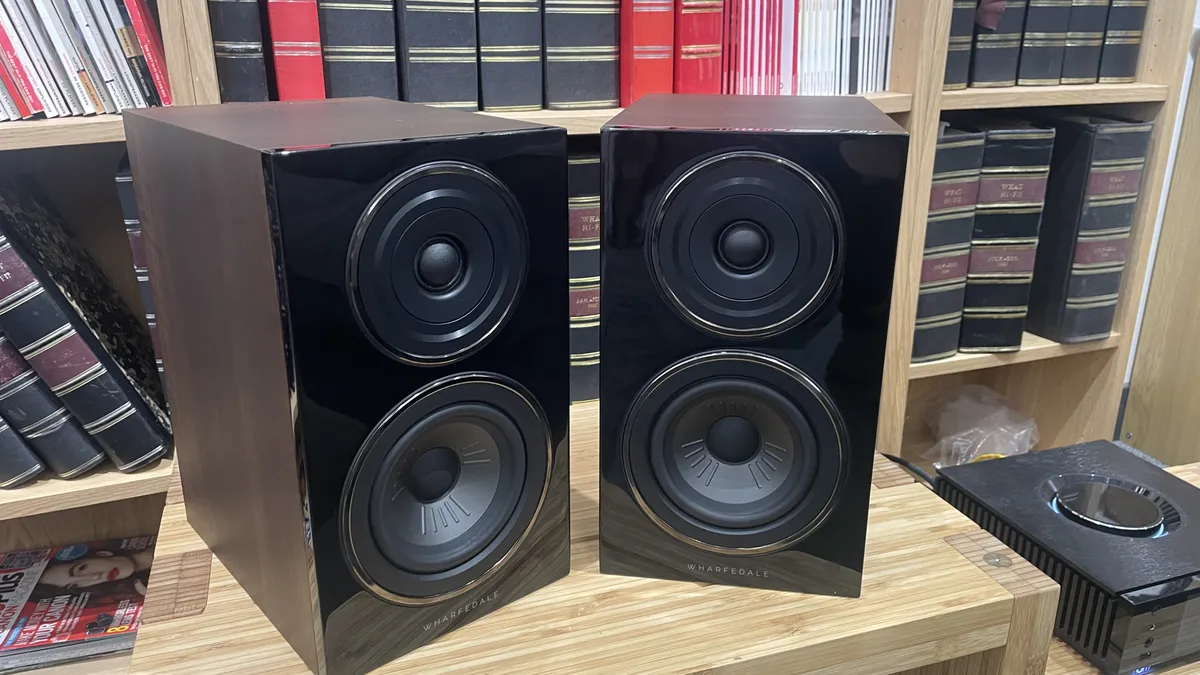
Good speaker deals usually ask you to accept one flaw before you even open the box. Maybe the cabinet is flimsy, the treble bites, or the bass turns soft when the room gets loud. The Wharfedale Diamond 12.1 is drawing attention for a cleaner reason: it sits in that rare clearance lane where the discount is tied to product timing, not weak demand. WharfedaleUSA lists the pair as “Last Call” at $399, down from $499, though availability can change fast because the page currently shows it out of stock.
For American buyers building a living-room stereo, vinyl corner, or desk setup, that matters. A smart clearance speaker deal is not about grabbing the cheapest box. It is about catching a proven model as a newer version enters the shelf space. That is why shoppers who follow consumer product deal news are paying attention here. This is not a Bluetooth party speaker. It is a passive pair meant for people who want real stereo separation, an amp, and a setup that can grow.
Why This Clearance Speaker Deal Feels Different
A clearance tag can mean two opposite things. Sometimes it means a retailer wants dead inventory gone. Other times, it means a respected product is being phased out because the next line has arrived. This speaker falls closer to the second camp, which is why the buzz feels stronger than a normal markdown.
The price cut is tied to timing, not panic
The official U.S. page marks the older 12.1 as “Last Call,” with a $399 sale price shown against a $499 regular price. That is a meaningful drop for passive bookshelf speakers, especially when the design was not built as a throwaway entry model.
The catch is stock. The same page shows “Out Of Stock,” so the deal angle is not as simple as “add to cart today.” In practice, American shoppers may need to watch authorized dealers, open-box returns, or leftover color finishes. Walnut might vanish before white oak. Black may come back in one small batch and then disappear.
That scarcity can make people careless. Don’t be careless.
A $399 pair still needs the right home. If you have no amplifier, no speaker wire, and no space to position them, your real cost climbs. The better question is not “Is it cheap?” It is “Can this pair beat the soundbar, smart speaker, or tiny powered monitors I already own?”
For many homes, yes. But only when the setup matches the room.
Clearance is not the same as outdated
The mildly strange part is that the newer Diamond 12.1i is already the current U.S. listing at $499, with its own 5-inch driver, 1-inch textile dome tweeter, 88 dB sensitivity, and 20–100W recommended amplifier range. That makes the older model feel less like an antique and more like the last train out before the new ticket price becomes normal.
That is the hidden appeal. Buyers are not chasing nostalgia. They are chasing the point where a mature design becomes cheaper because the shelf label changed.
This is common in hi-fi. The new model gets the press cycle. The outgoing model gets the value hunters. A buyer who does not need the latest badge can sometimes walk away with the better deal.
That does not mean the older pair is automatically the smarter buy. Warranty status, return policy, finish choice, and dealer trust matter. A sealed pair from an authorized seller carries a different risk profile than a dusty marketplace listing with one dented corner.
For shoppers comparing home audio upgrade ideas, the lesson is plain: clearance can be a sweet spot, but only when the product was strong before the discount.
Where Wharfedale Diamond 12.1 Fits in a Real American Room
A good pair of speakers does not live on a spec sheet. It lives near a couch, beside a TV, on a desk, or in the corner of a dining room where the outlet is never where you need it. That is where this model gets interesting, because its size and tuning serve common U.S. spaces better than many bargain speakers.
Small rooms reward balance more than brute bass
The 12.1 uses a two-way design with a 5-inch bass driver, 1-inch textile dome tweeter, rear port, 87 dB sensitivity, and a listed 65Hz–20kHz frequency response. It is also about 12.2 inches tall, 7 inches wide, and 10.9 inches deep. Those numbers tell a practical story.
This is not a speaker for shaking a finished basement during football Sunday. It is better suited to apartments, home offices, bedrooms, and modest living rooms where tone matters more than chest-thump volume.
That can sound like a limitation. It may be the reason people like it.
A lot of budget hi-fi speakers try to impress in the first ten seconds. They push the upper treble, fake the bass, or make vocals sound larger than life. That can work on a showroom floor. At home, it gets tiring. A calmer speaker can be easier to live with for three-hour playlists, late-night TV, and weekend vinyl sessions.
Think of a 12-by-14-foot office with a small integrated amp, a turntable on one wall, and the speakers pulled slightly forward on stands. In that room, a huge floorstander would be awkward. A tiny smart speaker would flatten the music. A measured standmount pair lands in the useful middle.
The bookshelf label can mislead buyers
“Bookshelf” sounds simple. Put the speakers on a shelf and move on.
That is not always the best move. What Hi-Fi? noted that the 12.1 is compact at about 31 cm tall and can stay listenable even when placement is not perfect, but it also sounds balanced when placed out into the room. The rear port makes breathing room worth thinking about.
Here is the counterintuitive point: a speaker called a bookshelf model often performs better when it is not stuffed into a bookshelf.
That matters in American homes because media furniture is often built for décor, not sound. A deep shelf under a TV may look tidy, but it can trap bass and blur vocals. A cheap pair of 24-inch stands may do more for sound than spending another $150 on a bigger amplifier.
You do not need a showroom. You need basic geometry.
Keep the left and right speaker at similar height. Aim the tweeters near ear level when seated. Give the rear port a little space from the wall. If the bass gets boomy, pull them forward before blaming the speaker. Small shifts can change the whole mood of the room.
That is why this clearance speaker deal makes more sense for patient buyers than impulse shoppers.
How It Compares With Newer Budget Hi-Fi Speakers
The budget hi-fi market has become crowded in a good way. Buyers can choose powered monitors, compact passive pairs, soundbars, and all-in-one wireless systems. That choice helps, but it also creates noise. The older 12.1 stands out because it belongs to the old-school passive camp, where the speaker is only one part of the chain.
The newer 12.1i sets the current price ceiling
The updated 12.1i is listed by WharfedaleUSA at $499, with black, walnut, and grey finishes shown on the product page. TechRadar’s 2026 review also described the 12.1i as a two-way standmount design priced at $499 in the U.S., with a 25mm tweeter, 130mm mid/bass driver, rear-facing bass port, and 65Hz–20kHz response.
That gives shoppers a clean reference point. If the outgoing pair appears at $399, the value case depends on whether the newer tuning, finish options, or availability are worth the extra money.
For some buyers, the answer will be yes. The 12.1i may be easier to buy new, easier to match in a full surround set, and safer from a warranty standpoint. For others, the older 12.1 at clearance pricing hits the better balance.
The quiet truth is that budget hi-fi speakers do not age like phones. A five-year-old passive speaker does not lose app support. It does not stop receiving updates because it never needed them. If the drivers, cabinet, and crossover were good, the core value can last.
That is why older passive speakers can remain attractive long after a product cycle moves on.
Passive speakers ask more from you, then give more back
A soundbar wins on ease. One box. One cable. Done.
Passive speakers ask for an amplifier, placement, wire, and patience. That sounds annoying until the system starts paying you back. You can change the amp later. Add a subwoofer. Move the speakers to another room. Build a two-channel setup first, then shape it around your habits.
That path is not for everyone. A parent who wants cleaner TV dialogue by dinner may be happier with a soundbar. A renter who moves every year may want powered monitors. A college student in a shared apartment may need headphones more than speakers.
Still, a passive pair has a long shelf life. That is the non-obvious advantage.
If a $399 speaker pair stays in your system for six years, the cost per month becomes tiny. Many gadgets lose their charm in one season. A good stereo pair can become part of the room.
This is also where speaker placement tips for small rooms can matter more than buying the next model up. Better placement often beats bigger spending. Not always. Often enough.
What Smart Buyers Should Check Before They Jump
The deal is tempting, but speakers are not sneakers. You cannot judge the whole purchase from the markdown and finish color. The smartest buyers slow down for ten minutes before checking out, because the wrong amp or room can turn a smart deal into an awkward return.
Match the speaker to your amplifier and habits
The older 12.1 lists a recommended amplifier range of 20–100W and an 8-ohm compatible nominal impedance, with a 3.9-ohm minimum impedance. That does not mean you need a giant receiver. It means you should avoid pairing them with weak, mystery-box gear that struggles when the music gets dense.
A basic integrated amp from Yamaha, Denon, Cambridge Audio, Marantz, or NAD can make sense. So can a good compact class-D amp if it is honestly rated and has the inputs you need. The boring details matter: TV optical input, phono stage, subwoofer output, remote control, and enough space for ventilation.
Your habits should lead the gear list.
If you mostly stream Spotify while cooking, you may want an amp with Bluetooth or Wi-Fi. If you play vinyl, make sure the phono stage exists somewhere in the chain. If the speakers flank a TV, plan how volume control will work before the first movie night.
A clearance speaker deal gets less exciting when the amp setup becomes a daily hassle.
Check return terms, finish, and stock reality
Because the official U.S. page currently shows the older pair out of stock, many buyers will end up looking beyond WharfedaleUSA. That can be fine, but the seller matters. Authorized dealers, clear return windows, and clean condition notes should carry more weight than saving another few dollars.
Open-box can be a good path. Used can be fine too. But speakers can hide problems. A pushed-in tweeter, mismatched finish, cabinet swelling, loose binding post, or missing grille can turn a bargain into a repair project.
Ask for photos of both speakers from the front, back, top, corners, and binding posts. Confirm the pair includes matching finishes. Make sure “single speaker” is not buried in the listing. That mistake happens more than people admit.
Also think about the future. If you may build a home theater system later, check whether matching center and surround models are still easy to find. If this will stay a two-channel music setup, that matters less.
For a simple stereo room, the older pair can still be a strong buy. For a full matched surround system, the newer line may be safer.
Conclusion
Clearance pricing only matters when the product underneath still deserves attention. That is the case here, as long as buyers stay honest about stock, setup, and room fit. A discounted passive speaker is not a shortcut around basic hi-fi rules. It still wants space, a decent amp, and a listener willing to place it with care.
The Wharfedale Diamond 12.1 earns its current attention because it gives American shoppers a chance to buy into a respected stereo line at a lower entry point. It is not the loudest choice, the smallest choice, or the easiest plug-and-play option. That is fine. Its value sits in tone, build, and long-term usefulness.
The smartest move is simple: check live stock, compare the newer 12.1i price, read the return terms, and measure your space before paying. If the fit is right, this could be one of those quiet buys you enjoy long after the clearance tag is gone.
Frequently Asked Questions
How much is the 12.1 speaker pair on clearance?
The official U.S. listing has shown the pair at $399 against a $499 regular price, though stock can change without warning. Always confirm live availability and seller terms before buying, since clearance items can disappear fast or return in small batches.
Is this speaker good for a small apartment?
Yes, it can work well in apartments, bedrooms, and home offices when placed with care. It is better for balanced music listening than for shaking walls. Give the rear port some breathing room and avoid trapping the speakers inside tight shelves.
Do I need an amplifier for this pair?
Yes. These are passive speakers, so they need an amplifier or receiver. A modest integrated amp can work if it has enough clean power and the inputs you need for streaming, TV, vinyl, or a desktop source.
Is the newer 12.1i worth paying more for?
It may be worth it if you want easier availability, current-line support, or a cleaner path to matching speakers later. The older model makes more sense when the price gap is meaningful and the seller offers a fair return policy.
Can I use these speakers with a turntable?
Yes, but the turntable setup needs a phono stage. Some turntables include one, and some amplifiers have one built in. Without that stage, vinyl playback will sound thin, quiet, and wrong.
Are these better than a soundbar?
For music, a properly placed stereo pair can give wider imaging and a more natural left-right stage than many soundbars. For quick TV setup, a soundbar is easier. The better choice depends on whether you value sound quality or convenience more.
What room size fits this speaker best?
Small to medium rooms are the safest match. Think home office, bedroom, apartment living room, or a focused music corner. A large open-plan space may need bigger speakers, a subwoofer, or a system built for higher output.
What should I check before buying used or open-box?
Check both cabinets, tweeters, woofers, grilles, binding posts, and finish match. Ask whether the listing is for a pair, not one speaker. A clear return window is worth paying for, especially when buying clearance audio gear online.