Pet owners know the wrong vacuum does not fail all at once. It loses the fight slowly, one fur-packed rug edge and one dusty sofa seam at a time. That is why the Pet Hair Eraser drop is getting attention from U.S. shoppers who have been waiting for a better price on a full-size corded cleaner. The main question is not whether the sale looks tempting. It does. The better question is whether this Bissell vacuum deal fits the way your home gets dirty.
For many dog and cat households, the appeal is plain: upright power, pet-focused tools, and a design built for daily messes instead of occasional deep cleaning. Readers who follow smart consumer product updates already know that the best sale is not always the biggest markdown. It is the one that lines up with a real household problem. If your floors collect fur by dinner and your couch looks coated after one nap session, this price drop deserves a closer look. It also deserves a careful one, because sale pricing can make similar models look identical when they are not.
Why the Pet Hair Eraser Price Drop Has Pet Owners Pausing
A lower price changes the conversation around a vacuum because cleaning gear sits in an awkward category. You need it, but you do not want to overspend on features that do not match your floors. That tension is why this sale matters. A pet-focused upright can look average on paper until you picture a golden retriever shedding through spring, a tabby sleeping on the same chair each day, or a rental with carpeted bedrooms and hard floors near the kitchen.
Sale pages also blur the details that matter. One retailer may show a coupon. Another may bundle a different pet tool. A third may list a similar-looking model that is not the same package. The smart move is to treat the lower price as an invitation to inspect, not a signal to rush. For pet owners, model fit matters more than the color on the box.
A low price changes the value math
A vacuum built for pet hair has to solve more than visible fur. It has to pull grit from carpet fibers, handle clumps near baseboards, and avoid turning long hair into a wrapped brush mess. The Bissell Turbo Plus sits in the practical middle of the market: more serious than a cheap dorm vacuum, less expensive than premium machines that can cost as much as a small appliance suite.
That middle lane is where many U.S. shoppers should pay attention. A lower sale price can move a pet hair upright vacuum from “maybe later” into “buy before the next shedding cycle.” The non-obvious part is that a discount can make you more honest, not less careful. When the price falls, you can judge the machine against the mess in your home instead of trying to make it compete with every luxury vacuum on the shelf.
Think about a family in Ohio with two kids, one Labrador, wall-to-wall carpet upstairs, and vinyl plank downstairs. A robot vacuum may handle daily surface dust, but it will not dig into stair edges or lift fur from a couch cushion with the same control. A stick vacuum may feel easier for ten minutes, then run out of battery when the hallway rug still looks gray. In that home, a corded upright at a lower price can make more sense than the flashier choice.
When a Bissell vacuum deal is worth taking seriously
A sale deserves attention when the product already matches the job. This is where a Bissell vacuum deal can stand out for pet owners who want a dedicated floor machine rather than a do-everything gadget. The value comes from fit: corded power for longer sessions, a brush design aimed at hair pickup, and attachments that make sense for upholstery and corners.
That does not mean every buyer should grab it. A studio apartment with bare floors and one short-haired cat may be better served by a lighter cordless model. A large house with thick rugs, multiple pets, and weekend cleaning marathons is a different story. The discount matters more when your current machine leaves behind fur lines after two passes or coughs dust back into the room while you empty the bin.
There is also a timing lesson here. Many shoppers wait until their old vacuum quits, then buy under pressure. That is how people end up with the nearest model in stock, not the right one. A price drop gives you a calmer window. You can compare the current sale against your floors, your storage space, and your tolerance for noise and weight. That is better shopping.
How This Upright Handles Fur, Crumbs, and Mixed Flooring
Once the price gets your attention, the next question is performance. Pet homes create layered messes. Fur sits on top. Dirt hides under it. Kibble rolls under cabinets. Litter tracks into hallway corners. A good vacuum has to handle that mix without asking you to change tools every two minutes. That is where design choices matter more than shiny language on a product box.
A clean-looking room can still hold a lot of pet debris. Walk across a beige carpet in socks after a rainy dog walk and you feel it right away. The grit is not dramatic, but it grinds into fibers and dulls the room. That is why the head design, hose reach, and tool storage all matter in normal homes, not only in lab-style tests.
The brush design matters more than peak suction
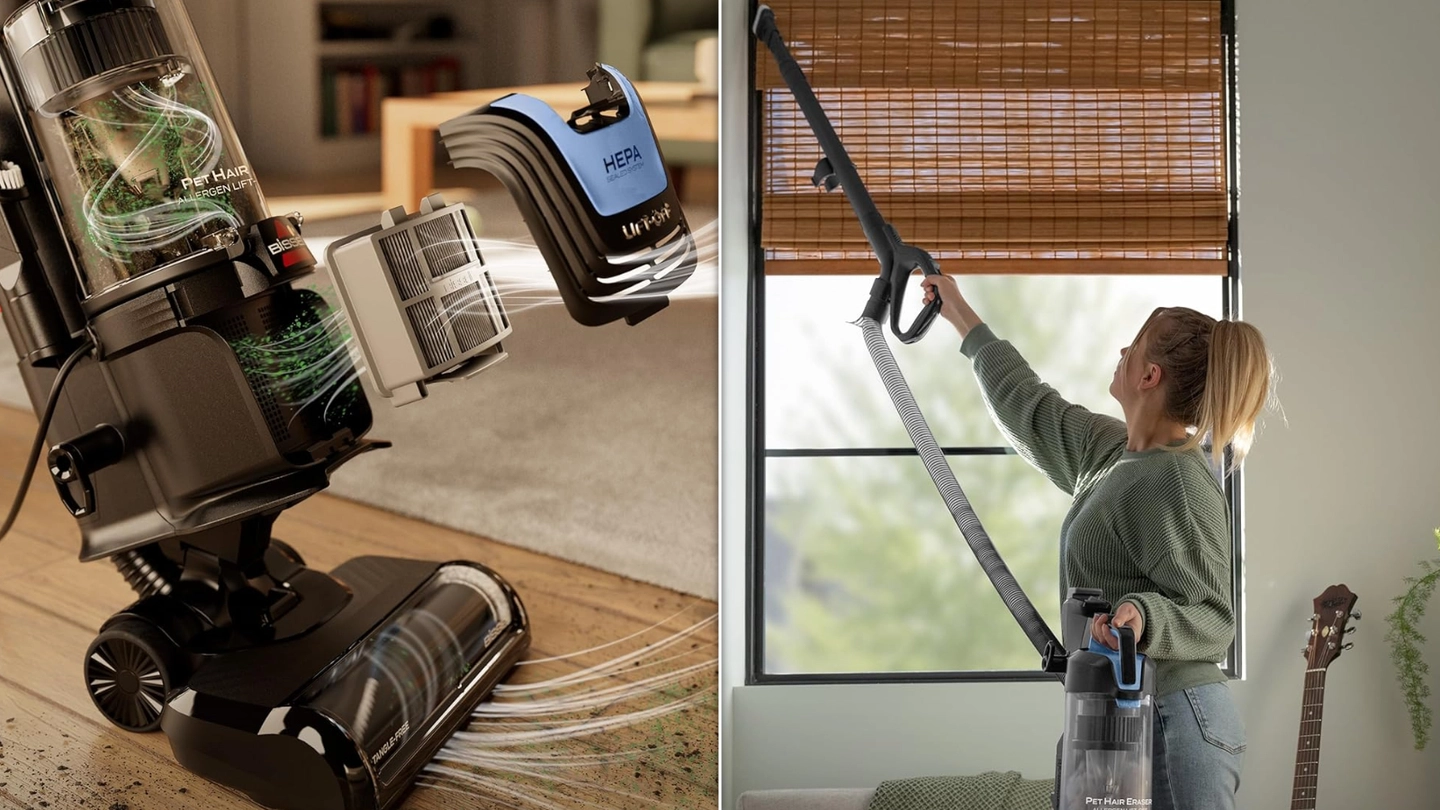
Many shoppers look for suction first. It matters, but hair pickup often depends on how the brush touches the surface. A tangle-free brush roll can matter more than a raw power number because pet hair behaves like thread. It winds, mats, and grips fabric. If the brush turns into a hair spool after one room, the vacuum may still run, but it stops cleaning well.
This is the kind of detail that pet owners learn the hard way. You vacuum the living room, flip the head over, and find a tight band of hair wrapped around the roller. Then come the scissors. Then the frustration. A tangle-free brush roll does not mean zero maintenance forever, but it can reduce the ugly routine of cutting hair loose after every pass.
The counterintuitive point is that easy maintenance can improve cleaning more than extra power. A clean brush keeps contact with carpet. A clogged or wrapped brush skates across the top. That is why a lower-priced pet model with smart brush design can beat a more expensive vacuum that was not built around shedding.
Apartment floors need control, not brute force
A lot of American renters have mixed flooring: carpet in the bedroom, laminate in the living area, tile in the bath, and rugs placed wherever the floor feels cold. A pet hair upright vacuum needs to move across those surfaces without spraying crumbs across the room or grabbing rug edges like a shop tool. Control matters.
The Bissell Turbo Plus design aims at this kind of daily movement. Swivel steering helps around chair legs and pet bowls. Edge-focused cleaning helps along baseboards, where fur gathers in thin lines that a quick pass often misses. Variable suction also matters because not every surface wants full pull. A washable rug near the door can bunch if the vacuum grabs too hard.
Here is the real-world test: vacuum under the dining table after a dog has eaten a biscuit there. You are not dealing with one mess. You have fine crumbs, hair, paw grit, and chair legs blocking your path. A machine that turns well and keeps pickup near the edge of the head can feel more useful than one that only wins on a clean, open strip of carpet.
What Pet Owners Should Check Before Buying
A sale can make a product look simpler than it is. Before you buy, slow down and match the vacuum to your home. This is not about talking yourself out of a deal. It is about avoiding the sour feeling that comes when a good machine solves the wrong problem. Pet homes differ. A husky in Arizona, a pug in a Boston apartment, and two indoor cats in a Florida condo do not create the same mess.
The best pre-purchase check is boring, which is why people skip it. Measure the closet. Think about stairs. Look at how often you clean upholstery. Read the filter and tool details before the checkout page. Those small checks can save you from returning a machine that was strong on floors but wrong for your daily habits.
Corded power is a strength in the right home
Corded vacuums can feel old-school until you clean a full floor. Then the benefit becomes clear. You do not plan around a battery. You do not wonder whether the last bedroom will get half power. You plug in, work through the rooms, and finish. For homes with heavy shedding or larger carpet zones, that consistency has value.
The tradeoff is movement. A cord asks you to switch outlets and pay attention as you turn corners. Some buyers hate that. Others prefer it because the machine keeps going as long as they do. In a ranch house with open rooms, a long cord can feel easy. In a narrow apartment with tight furniture, a cordless stick may feel less annoying for weekday touch-ups.
A pet hair upright vacuum is best when you see it as the main cleaner, not the only cleaner. Pair it with a small handheld for the car or a compact cordless for spilled litter, and the upright can handle the deeper weekly pass. That mix can cost less than chasing one perfect machine.
Allergen control is more than a label
Pet mess is not only hair. Dander, dust, pollen, and fine debris ride in the same traffic lanes. That is why sealed systems and good filters matter, especially if someone in the home has asthma or allergies. The American Lung Association’s vacuum guidance points shoppers toward stronger filtration choices, and that advice is worth reading before any vacuum purchase.
The Bissell Turbo Plus is often discussed because of its sealed allergen-focused system and pet tools, but buyers should read the exact model listing before checkout. Product names can look similar across retailers. One version may include a different accessory set or filter package. That tiny difference can matter if you are buying for pet dander as much as visible fur.
Here is the mildly odd truth: vacuuming can stir up dust while it removes it. That does not mean you should avoid vacuuming. It means the whole system matters. Empty the bin outdoors when possible, replace filters on schedule, and do slow passes in bedrooms where fabric holds more debris. A discount helps at purchase time; maintenance protects the value after that.
How to Get More Value After the Sale
Buying the right vacuum is only half the win. The other half comes from how you use it. Pet owners often clean in reaction to embarrassment: company is coming, the couch looks bad, or socks pick up fur after one walk across the room. A better approach is less dramatic. Clean the spots where fur starts before it spreads everywhere else.
A sale purchase can fail when it becomes a closet trophy. The machine may have enough power and the right tools, but it cannot help if you only drag it out after the house already feels out of control. Value grows through use. That means keeping the vacuum easy to reach, emptying it before it overfills, and building a small routine around the places your pet touches every day. Put it where the mess begins, not where storage looks neat on a floor plan.
Build a cleaning rhythm around where pets live
Most pets have routes. The dog enters through the same door, naps beside the same sofa, and shakes near the same rug. The cat jumps from window ledge to chair to bed like it owns the floor plan. Those paths tell you where to vacuum first. Follow the animal, not the room order.
Start with the zones that create the most transfer: entry rugs, couch fronts, stair treads, and bedroom corners. A tangle-free brush roll helps here because these areas collect the worst mix of long hair and ground-in dust. Use slow, overlapping passes instead of fast stripes. Speed feels productive, but it often leaves debris buried in carpet.
This is where pet-friendly home cleaning tips can support the purchase. The vacuum should become part of a rhythm that includes washable throws, door mats, regular grooming, and filter checks. One machine cannot fix a shedding season alone. It can make the season easier to live with.
Know when a bigger vacuum is not the answer
A sale can tempt people into thinking more machine means less work. Sometimes it does. Sometimes it creates a new problem: a vacuum too heavy for stairs, too bulky for a closet, or too loud for a nervous rescue dog. A good buying decision includes friction. Where will you store it? Who will use it? How often will it come out?
For many homes, the best setup is a strong upright for floors and a small tool for quick furniture work. That is why comparing this deal against a vacuum cleaner buying guide helps. You are not asking which vacuum is best in the abstract. You are asking which one you will use when the hallway rug looks rough and the dog is already tracking in more dirt.
The quiet insight is that convenience beats perfection. A premium machine hidden in the basement loses to a solid upright parked in a closet near the living room. If the lower sale price gets you a capable vacuum that you will use twice a week, the savings may show up in cleaner rugs, fewer lint rollers, and less stress before guests arrive.
Conclusion
A good sale does not remove the need for judgment. It makes judgment more rewarding. This model makes the most sense for U.S. pet owners who want corded staying power, practical tools, and a floor-first cleaner that can handle fur before it spreads across every fabric surface. The smartest way to treat the Pet Hair Eraser sale is to match it against your home, not against a fantasy version of cleaning where one pass fixes everything.
Check the model number, compare the final cart price, and read what comes in the box before you buy. If your current vacuum leaves trails, wraps hair around the roller, or turns couch cleaning into a chore you avoid, this discount may be the right opening. Buy the machine for the mess you actually have, then build a routine that keeps the fur from winning.
Frequently Asked Questions
How do I know if this Bissell sale is a good price?
Compare the final cart price across major U.S. retailers, including shipping and any coupon box at checkout. A deal is stronger when the model number, accessory set, and return policy match. Do not judge by list price alone.
Is this vacuum good for homes with dogs and cats?
Yes, it suits many homes with shedding pets, especially where carpet, rugs, upholstery, and baseboards collect fur. It makes less sense for tiny spaces with mostly bare floors and light shedding, where a smaller cordless cleaner may be easier.
Does a tangle-free brush roll mean no hair maintenance?
No. It can reduce hair wrap, but long hair and heavy shedding still require checks. Look at the roller after large cleaning sessions, clear the intake area, and keep filters fresh so pickup does not drop over time.
Is a corded upright better than a cordless vacuum for pet hair?
A corded upright often works better for long cleaning sessions because power stays steady. Cordless models win for speed and quick spills. Many pet homes benefit from both: upright for weekly floor cleaning, compact cordless for daily touch-ups.
Can this vacuum help with pet dander?
It can help remove dander from floors and fabric surfaces, but it is not a full air-quality solution. Strong filtration, regular filter changes, washing pet bedding, and using an air cleaner in key rooms can all support better results.
What should I check before buying from Amazon, Walmart, or Target?
Check the exact model number, included tools, return window, warranty terms, and whether the item ships from the retailer or a third-party seller. Similar product names can hide small package differences that matter after purchase.
Is this vacuum too large for an apartment?
It depends on storage and floor layout. Renters with pets, rugs, and carpeted rooms may appreciate the power. People with tight closets, many stairs, or mostly hard floors may prefer a lighter machine for everyday use.
How often should pet owners vacuum during shedding season?
High-shedding homes often need quick passes every two or three days in pet zones, plus a deeper weekly clean. Focus on entry rugs, sofa fronts, stairs, and bedrooms first because those spots spread fur through the rest of the home.